Advice
Information
Efficiency

How can technology be implemented so that it actually creates value in the cleaning industry?
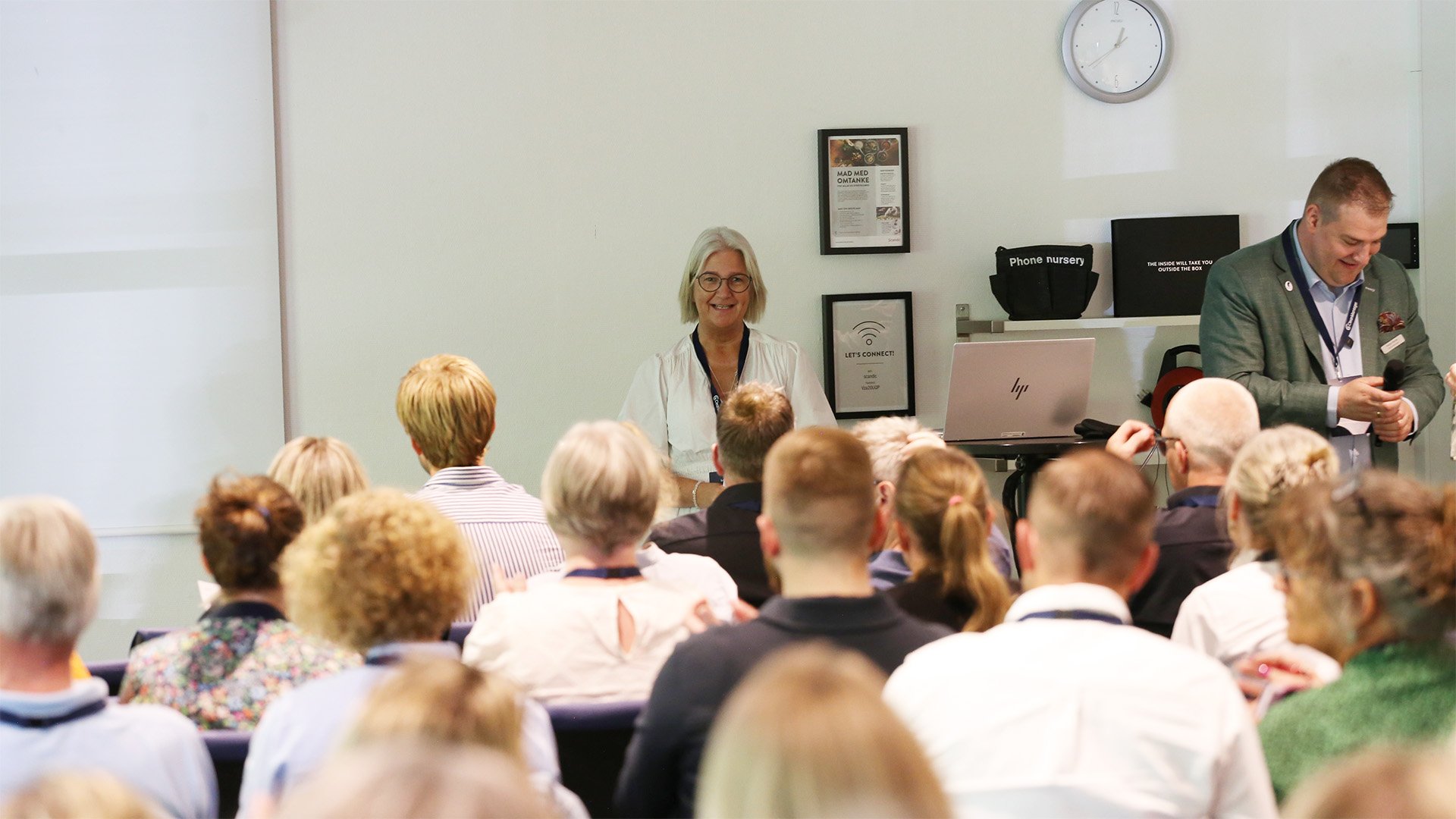
That question was answered at Industry Day 2026, when Lone Højgaard Petersen, Cleaning Services Manager from Faxe Municipality shared her experience with robots in cleaning operations. This wasn't about grand visions or technology for technology's sake, but about practical, everyday experience: from the first robot, which had its challenges, to an operation running around 430 robots.
Faxe Municipality's experience shows that cleaning robots only create value when they're matched to the right task, employees are involved, and the technology is given time to become a natural part of day-to-day operations.
It takes testing, training and a willingness to adjust along the way. But when it works, the technology can free up time, improve the working environment and deliver better cleaning quality.
This is just one piece of the puzzle — see how the whole industry is being transformed by technology and digitalisation, Dusting Off the Cleaning Industry with Technology and Digitalisation
Buying a cleaning robot doesn't make it work. Implementing it properly does.
Faxe Municipality's experience shows that successful technology in the cleaning industry requires:
In short: digital transformation isn't just about robots. It's about getting technology, people and operations to work together.
The first step is crucial, and it isn't to go straight at the technology. Look at operations first. Or, as the saying goes: find out where the shoe pinches.
As Frantz Furrer, CCO & Founder of CleanManager said at Industry Day, in his talk with Bjarne Overgaard, Director of BO Consult ApS:
"People choose a system or a robot before they've clearly defined their problem."
That point became very concrete in Lone Højgaard-Pedersen's talk from Faxe Municipality. The municipality's journey with cleaning robots didn't begin with a perfect solution. It began with "Mrs Cleaner", a robot from an innovation project that worked fine in a sports hall but struggled once it was moved to a school.
As Lone explained:
"She actually did well out in the hall, where she was on safe ground with a rubber floor. It was brilliant. But when we moved her to a School, she got rather strange. She started eating the mats."
Mrs Cleaner wasn't a great success, but the experience still sparked curiosity about what robots could do for cleaning. When Faxe Municipality later received funding for robot-based cleaning, the question therefore wasn't simply which robot was the most advanced, but which solution best suited their operations.
At a trade fair, Lone spotted a robot vacuum cleaner, and that's when the solution started to make sense. In Faxe Municipality, floor work was one of the tasks that wore employees down, and the biggest gain wasn't in floor washing, which was typically only done once a week. It was in sweeping and vacuuming, which were daily tasks.
That's why robot vacuum cleaners turned out to be the best-suited solution. They could take over some of the repetitive, physically demanding work, freeing up time and making a noticeable difference in everyday life.
So start by identifying the areas of your operation where the need is clear and the benefit is realistic. This can include both technological measures in physical cleaning and digital measures in scheduling, audits or administration.
You can read more on the importance of technology in the cleaning sector from the Industry Day 2025 insights, Why Technology Has Become Essential for Cleaning Companies.
Technology initiatives can make sense for:
Digital initiatives can make sense for:
The point isn't to start with the most advanced solution, but with the place where the need is clear, the solution can be tested, and the benefit can be felt in everyday operations.
When new technology is introduced into cleaning operations, it's rarely the machine itself that determines whether the project succeeds. It's the way it's received and used.
That's why employee involvement is crucial. If employees don't understand why the technology is being introduced, it can quickly be seen as a disruption or a threat rather than a help in everyday work.
This was also one of the key points in Kärcher's presentation. A robot can be a good investment, but only if it's actually used properly.
As Brian Sjællænder and Rasmus Engsvang put it:
"The most expensive machine is the one sitting in the basement, not being used."
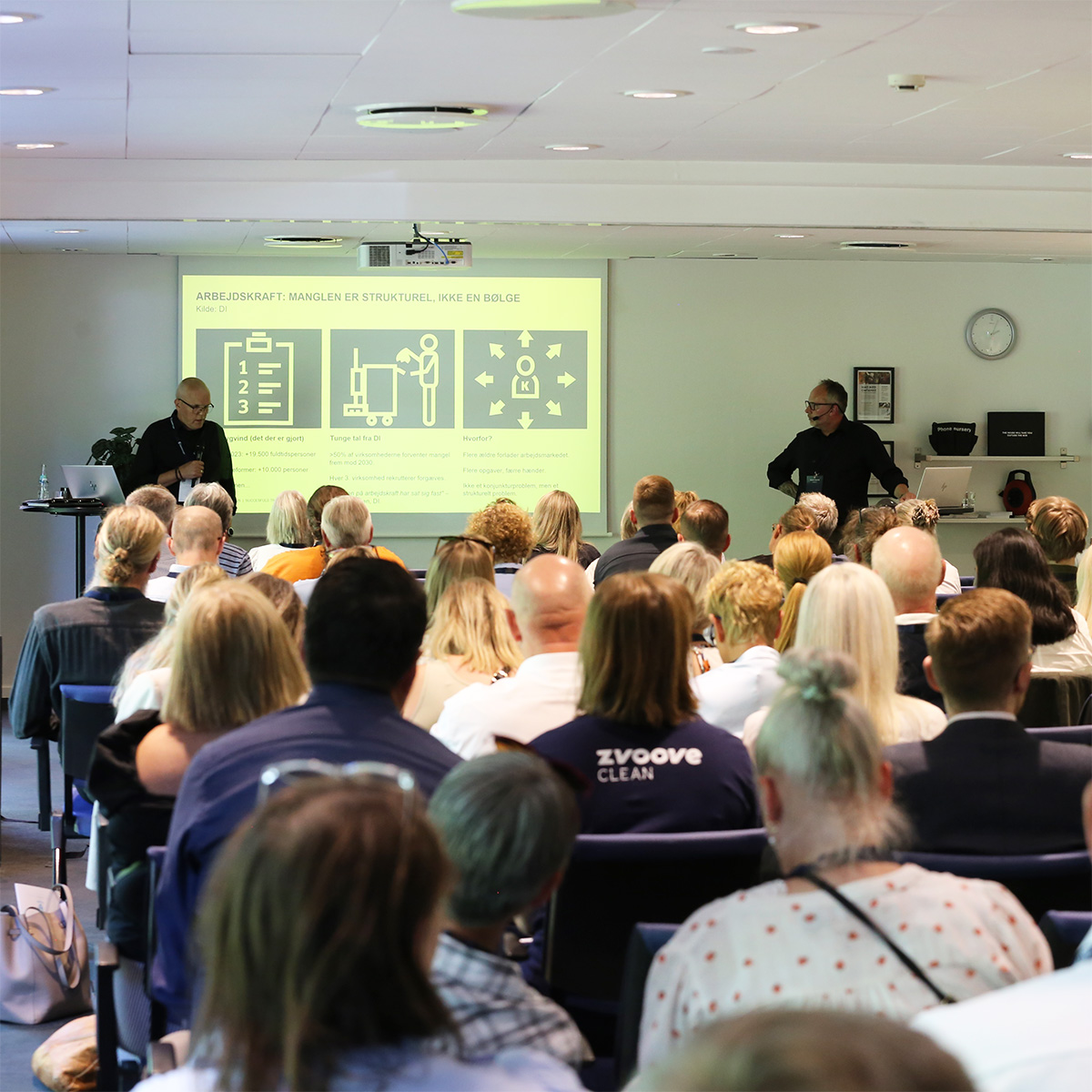
Kärcher's presentation on successful transformation with robots, by Rasmus Engsvang and Brian Sjællænder, at Industry Day 2026
Lone from Faxe Municipality made the same point. Here, the robots weren't simply rolled out into operations overnight. Before the major rollout began, the municipality started with a pilot school, where employees were given time to try out the robots, ask questions and get used to the new way of working.
As Lone explained:
"We started with a pilot school, where they were allowed to play around, try things out, and share their input – and their negativity."
This didn't just lead to better training. It also created a sense of ownership. It's a small example, but it says a lot. When employees start talking about the robots as part of everyday life, the technology is no longer just something new imposed from outside. It has become part of the workflow.
Because implementation isn't just about training people on buttons and functions. It's also about reassurance, ownership and understanding why the technology is part of the job.
That's where technology starts to create value.
3 steps to make technology part of everyday life
When new technology is being implemented, it mainly comes down to three things:
Robots in cleaning aren't there just to save time. They can also be a tool for looking after employees health.
In Faxe Municipality, one of the biggest benefits was that robot vacuum cleaners could take over some of the repetitive floor work. Sweeping and vacuuming are tasks performed again and again, which can take a toll on the body over time.
When robots take on some of the repetitive work, employees can put their energy into other tasks where their skills and judgement are still needed.
That doesn't mean the robots take over the whole job. They take on some of the strain.
And that can matter in the longer term. As Lone said towards the end of her talk:
"If we don't do this, it will probably just show up on another account, in the form of absence and burnout."
That's why robots shouldn't only be assessed as a financial investment. They should also be seen as an investment in the working environment, staff retention and a more sustainable working life for cleaning staff.
We also evaluated on our own cleaning robot and collected our insights in this article, Cleaning Robots: A Real Relief or just Hype? We Tested it.
New technology shouldn't just be implemented. It should be trialled, adapted and embedded.
So start with a limited trial before rolling the solution out more widely.
Use the trial to find out:
And remember: if the trial shows the solution isn't right for the task, that's an important lesson too.
As Bjarne and Frantz put it: "There's no shame in stopping. You can end up saying: this wasn't what we thought it would be, so we're stopping."
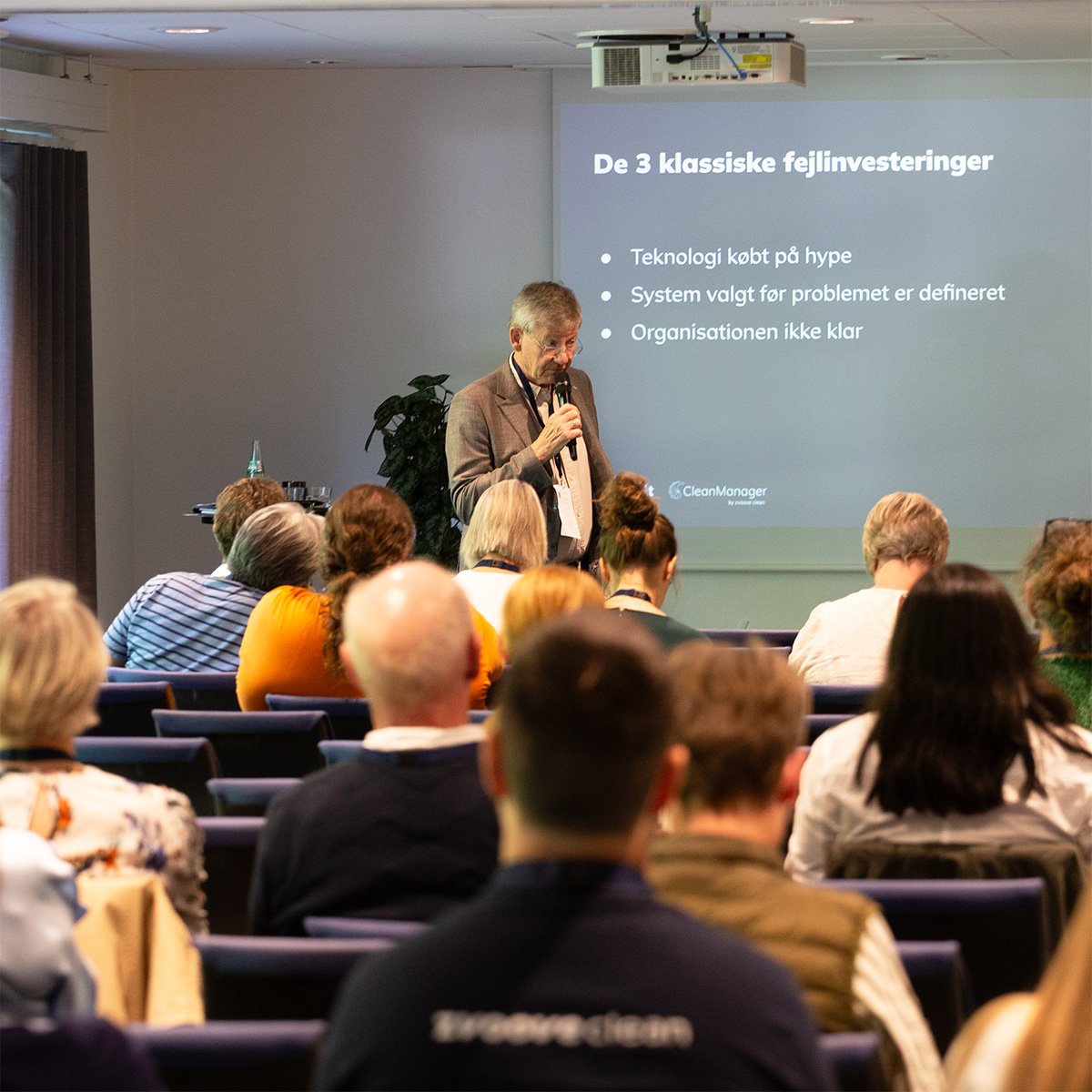
Bjarne Overgaard at his and Frantz Furrer's presentation on business cases at Industry Day 2026
Only scale up once the technology works in practice, and once operations, employees and management alike know how to use it.
Cleaning robots can create value in everyday operations, but only when they're chosen and implemented based on the specific needs of the operation.
Faxe Municipality's experience shows that it's not about buying the most advanced technology first. It's about finding the place where the need is clear, where employees can be involved, and where the solution can be tested in practice.
When the technology matches the task, it can free up time, improve the working environment, and make cleaning easier to plan and follow up on.
If AI is also on your radar, you can read more about how data, tasks and documentation tie in with AI in cleaning operations in our guide, 6 Steps to Using AI in Your Cleaning Operations.
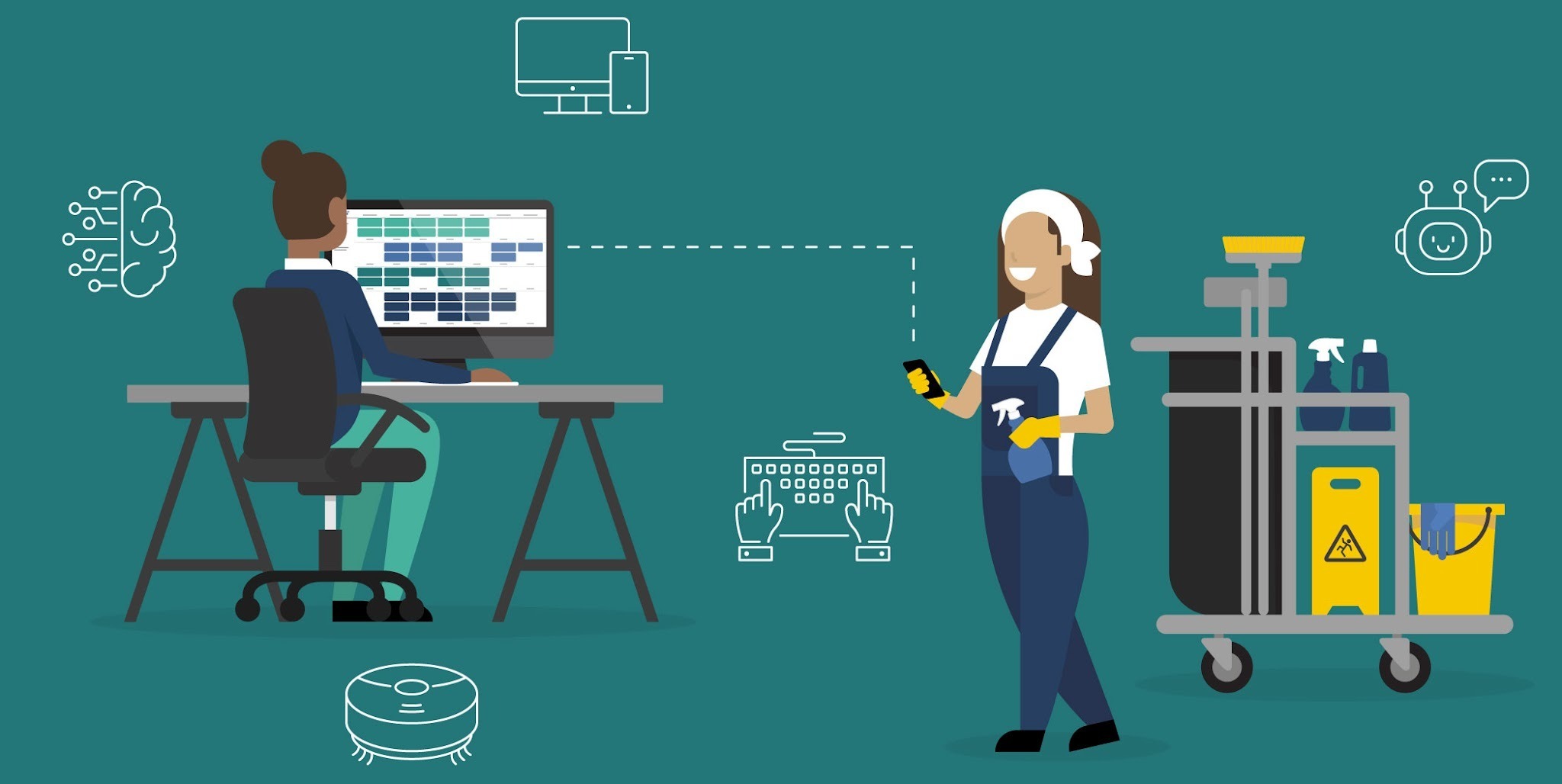
At CleanManager, we help cleaning companies get a better overview of scheduling, time, cleaning plans and operations.
Book a short 15-minute meeting if you'd like help figuring out where digital tools could make the biggest difference in your day-to-day work.