Advice
Information
Efficiency
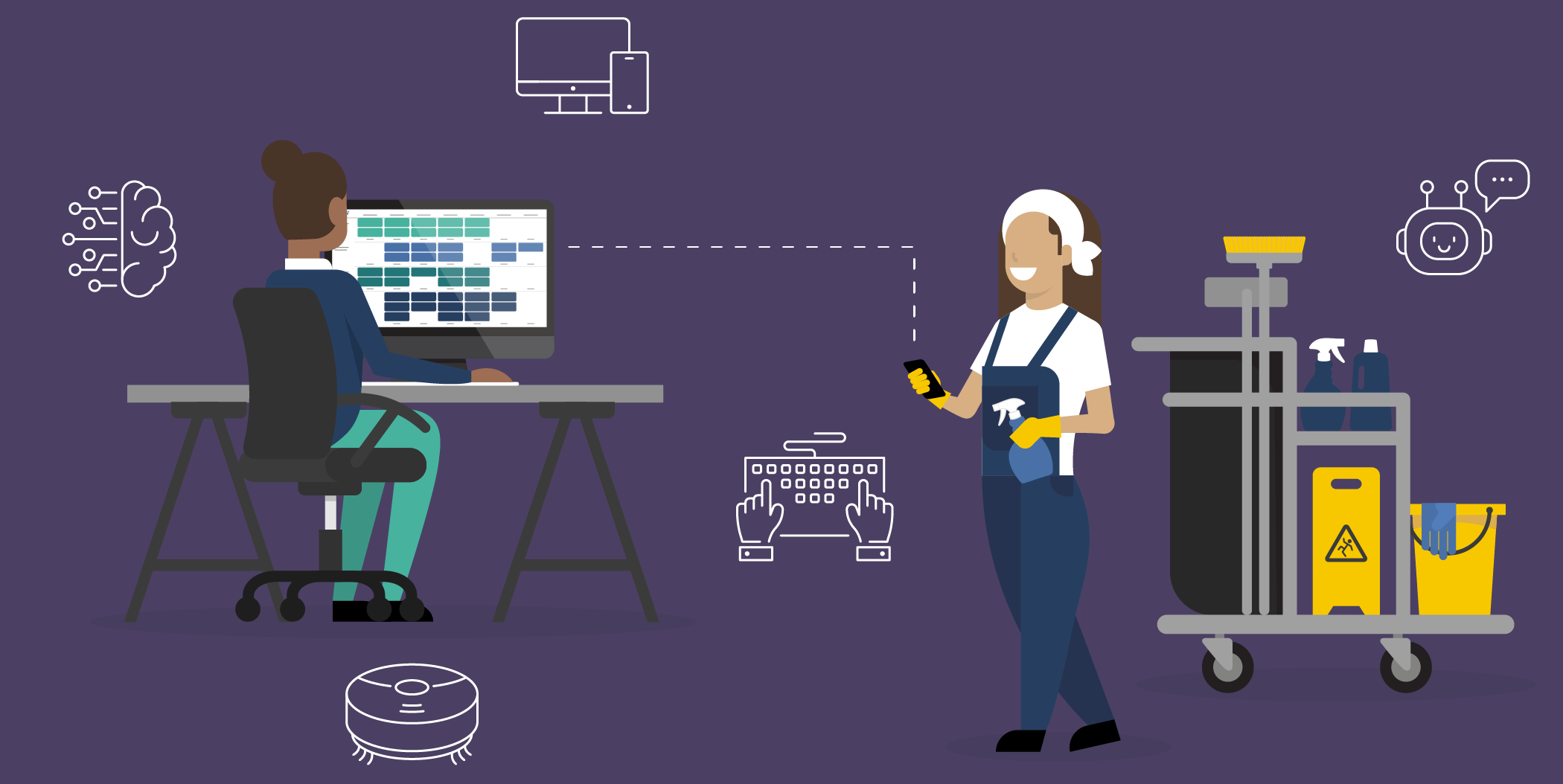

AI can seem overwhelming and technical. But in a cleaning business, AI can also be used for everyday, entirely ordinary tasks. This could be drafting a client email, summarising notes from a meeting, helping write a short instruction for an employee, or creating an overview of information that would otherwise take time to gather manually.
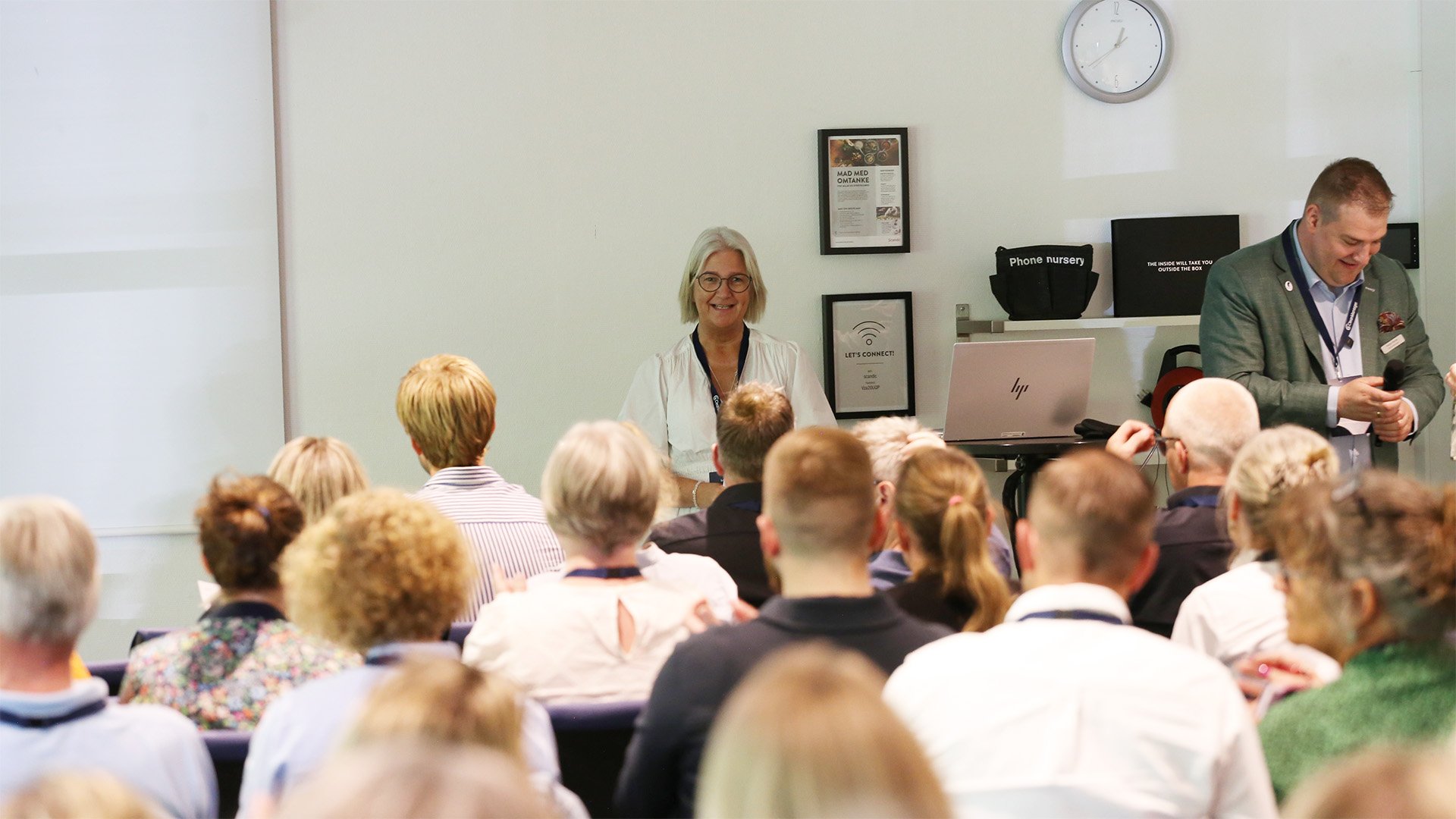
At Industry Day 2026, it became clear that the road to AI isn't just about the technology itself. Several presentations made the same point: before AI can really create value in cleaning operations, some more down-to-earth things need to be in place first; data, workflows and day-to-day operations.
Because what good is AI if information is scattered across spreadsheets, emails, paper forms or with individual employees? If hours are only pulled together manually ahead of payroll, if a client calls asking about a job that isn't documented, or if the schedule has to be reworked every time an employee calls in sick?
In this guide, you'll get 6 concrete steps for how cleaning companies can get better control of data, workflows and operations before starting to use AI more actively. The guide is based on insights from Industry Day 2026.
For a broader look at digitalisation in cleaning, including our own tests with IoT sensors and a cleaning robot, then read Enhancing Efficiency Through Digitalisation in the Cleaning Industry.
One of the clear messages from Industry Day 2026 was that AI can only help in cleaning operations once the things that already take up everyday time are under control.
Before cleaning companies start using AI more actively, they should have a clear picture of:
In short: AI requires that everyday operations are under control before the technology can make a real difference.
When AI is getting so much attention, it's tempting to start with the question: "How can we use AI?"
In a cleaning company, it makes more sense to start with the tasks that already take up time in everyday operations.
AI can, for example, help draft an initial reply to an email when a client asks a question. It can help summarise notes after a client meeting, draft a short instruction for a new employee, or structure information before a quote needs to be prepared.
This was also one of the points made by Daniel Hedelund, a consultant from AI Denmark, at Industry Day 2026. AI shouldn't be a project in its own right. It should help with a specific task.
So start by asking:
This might apply to situations that already take up time day to day. When a client asks whether a job has been done. When a new employee needs a task explained. When notes from a meeting need to be pulled together. Or when an email needs to be written that would otherwise take unnecessary time to draft from scratch.
Starting with the task makes it easier to assess whether AI can actually help, or whether the problem is really about better structure, clearer workflows or more centralised data.
Before AI can create value, the underlying workflows need to be clear.
Stefan Kramer, CEO of zvooveClean, made this point clear at Industry Day 2026. If a workflow is unclear, it doesn't automatically improve by being digitised. It just becomes digitally unclear.
As Stefan put it:
"Digitising a bad process does not fix it. It just makes the bad process run faster."
That's why cleaning companies should look at their current workflows before starting to digitise or use AI.
For example, ask:
Once the workflow is clear, it becomes easier to assess which data needs to be recorded, which digital tools make sense, and where AI can later support the work.
Once the workflows are clear, the next step is to bring your data together in one place.
In many cleaning companies, important information is scattered. Some of it sits in spreadsheets, some in emails, some on paper, and some only exists in individual employees' heads.
This makes it difficult to get an overall view of operations. And it makes it even harder to put data to active use.
That's why data on scheduling, time, tasks, quality and documentation should be brought together digitally.
This could include:
Once data is centralised, it becomes easier to follow up, spot patterns and make better decisions in day-to-day work.
This is also where a cleaning system like CleanManager can add value. By bringing scheduling, tasks, time and documentation together in one place, cleaning companies get a stronger foundation for managing their operations today – and a better basis for taking the next step with new technology later.
Once information is centralised, AI also becomes easier to put to practical use. AI can, for example, help draft an email to a client if you can already find the relevant job details. It can help summarise a case if notes or deviations have been recorded. And it can help prepare for a meeting if information about the client, the tasks and previous agreements isn't scattered across several places.
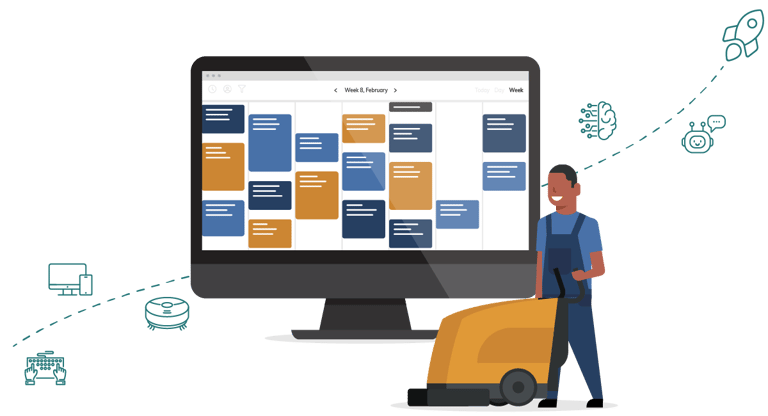
Data can make day-to-day cleaning operations easier to understand. Once information is recorded digitally, it becomes possible to spot patterns that would otherwise be hard to notice.
Jan Matthiesen from Textilia Group A/S demonstrated this at Industry Day 2026. He explained how Textilia uses RFID to track mops and cloths digitally. RFID is a small chip or tag that makes it possible to record and trace textiles as they're used and washed.
This gives Textilia a more precise picture of how mops and cloths are used, how much is being used, and what that means for quality, hygiene and cost.
The same principle applies to cleaning operations more broadly. When time, tasks, quality and deviations are recorded digitally, it becomes easier to see what's actually happening day to day.
Perhaps certain tasks take longer than planned. Perhaps the same deviations keep cropping up. Perhaps there are locations where follow-up or documentation needs to be clearer.
Once that becomes visible, it also becomes easier to act on. Data doesn't just provide an overview, it gives you a stronger basis for adjusting workflows, following up on quality, and making decisions based on what's actually happening in practice.
Data only creates value once it's put to active use in operations.
Once scheduling, time, tasks, quality and deviations are gathered digitally, it becomes easier to see where day-to-day work is running smoothly and where adjustments are needed. This might show, for instance, whether the time allotted matches the task, whether certain deviations keep recurring, or whether particular locations need closer follow-up.
So use data to ask more specific questions:
Once data is centralised and easy to find, it becomes easier both to act quickly and to use AI as support.
| Everyday situation | Once data is centralised | How AI can help |
|---|---|---|
| A client asks whether a job has been done | You can quickly find documentation and give the client a clear answer | AI can help draft a reply to the client |
| An employee calls in sick | You can see which tasks need to be reassigned and who can take them on | AI can help draft a message to employees or the client |
| Hours need to be pulled together for payroll | Time recording is centralised, with less manual tallying | AI can help create an overview or flag irregularities, if data is recorded consistently |
| The same fault keeps recurring for a client | Deviations are recorded, so the pattern becomes visible | AI can help summarise the issue and draft a follow-up |
As the overview becomes more concrete, decisions also become easier to act on. Data can help adjust plans, allocate resources better, and follow up on quality based on what's actually happening day to day.
Once data and workflows are more digital, AI becomes easier to test in a concrete way.
Daniel Hedelund from AI Denmark showed several examples at Industry Day 2026 of how AI can be used for practical tasks. Among other things, AI can help with email drafts, meeting preparation, instructions, quote-writing, and getting an overview of leads or client correspondence.
In a cleaning company, AI could, for example, be used to:
Start with one task that takes up time today, but that doesn't require giving AI access to sensitive information. Then test whether AI actually helps. Does it save time? Does it give a better overview? Is the draft usable? Or does the task still require too much manual correction?
Also keep data security in mind. Don't share client information, employee data or internal information in AI tools without knowing how that data will be processed.
AI can help write, gather, explain and structure information. But the company still needs to check the content, correct errors and assess whether the output can actually be used in practice.
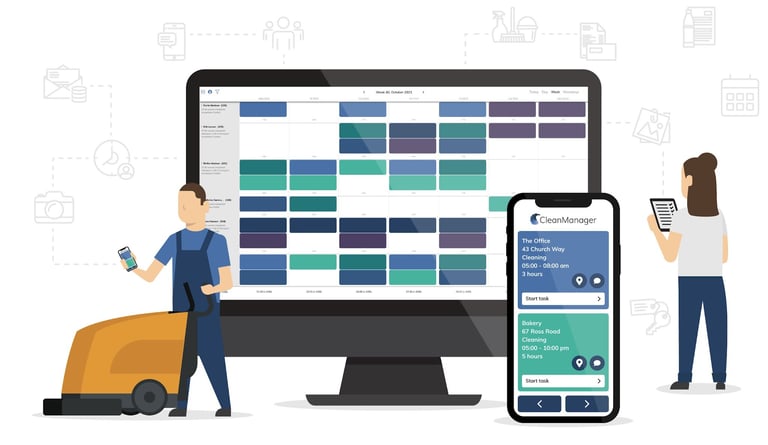
AI doesn't just require new tools. It also requires better control of the data and workflows that already exist in the business.
For many cleaning companies, the first step is about getting a better overview of operations, planning, time, tasks and documentation.
Once the key parts of operations are brought together in one place, it becomes easier to plan day-to-day work, follow up on tasks, document the work, and make decisions on a more informed basis.
This is where CleanManager can help.
CleanManager brings together scheduling, time tracking, cleaning plans, audits and operations in one system, giving cleaning companies a clearer overview of day-to-day work and a stronger foundation for taking the next step with new technology.
Want better control of your cleaning operations before taking the next step?
Book a short 15-minute meeting and see how CleanManager can help you create more overview in your day-to-day work.